
McDonough Address History Sources
No single roll identifies every person who occupied a McDonough address. Ownership records, subscriber lists, census pages, maps, and estate files each answer a different part of the question. Start with the source closest to the target date. Use the parcel card and deed index for a recent transfer, telephone listings for the mid-1970s, then census, newspaper, map, courthouse, and archive evidence farther back.
| Source | Local coverage | Where held | What it shows |
|---|---|---|---|
| Parcel card | Current; displayed sale depth varies | Henry qPublic | Assessed owner, mailing and situs addresses, parcel and deed references |
| Deeds and indexes | Reported to 1822; online cutoff unverified | Henry Clerk, Cott, GSCCCA | Parties, transfer date, book/page, instrument and legal description |
| Southern Bell books | 1974, 1975, two 1976 editions, 1977 | Library of Congress | Listed subscriber, compressed address and telephone |
| Federal census | 1830 through 1950 public after Henry formed | NARA and Brown House | Household at one census date and relationship clues |
| Sanborn maps | 1905, 1911, 1923 | DLG and UGA | Building footprint, use, materials and old numbers |
| Newspapers and probate | Weekly online 1891 to 1923; court files vary | Digital newspapers and Probate Court | Deaths, estates, family links and land descriptions |
A parcel card identifies an assessed owner, while a phone book identifies a listed subscriber. Neither names all previous residents. Date each finding and keep the parcel number or legal description beside it.
Build a simple evidence log as the work moves back. Give each row a source date, the name exactly as printed, the person's role, the address text, the parcel or legal anchor, and a link or citation. Keep blanks blank. This prevents an owner, subscriber, heir, or newspaper subject from being silently recast as an occupant. It also makes conflicts visible when two sources spell a surname or road in different ways.
Start McDonough Past Resident Research
The free Henry County qPublic search accepts a parcel ID, owner name, or property address. Search the street address, then save the parcel number, full situs address, owner name, owner mailing address, legal description, subdivision or land-lot details, and displayed deed references. Situs means the physical location. The mailing address is where tax notices go and may be somewhere else.
These facts give previous residents research a stable starting point. A current owner is not proof of current occupancy, and a homestead indicator can support but cannot prove it. The legal description matters more than the street spelling when an old record uses a lot, block, district, or land lot instead of a modern number.
Walk McDonough Resident Deeds Backward
The Henry County Clerk of Superior Court records deeds, liens, plats, and related land papers. County reporting says the land series reaches 1822, but the precise starting date for searchable online entries and images is not published. Cott eSearch requires sign-in or account creation, says its subscription charge is suspended, and tells users to check Certified Dates before choosing a range.
- Copy the current owner, parcel, and legal description from qPublic.
- Locate that owner's acquisition deed in Cott or GSCCCA by party, date, instrument, or book and page.
- Read the deed, identify the grantor who transferred the land, and confirm the legal description.
- Search that seller as an earlier grantee, the person who received the land, to find the prior acquisition.
- Repeat until online coverage ends, then continue at the clerk counter and Georgia Archives.
- Chain of title
- The linked run of transfers for the same land.
- Grantor and grantee
- The grantor transfers an interest; the grantee receives it.
- Legal description
- Lot, block, subdivision, land lot, district, metes, or bounds that identifies the land despite address changes.
- Certified copy
- An official copy authenticated by the custodian, not merely a screen image.
When McDonough Online Records End
An account screen is not the end. Bring party names, approximate years, parcel number, and legal description to the Henry Clerk's counter and ask for a cited index entry, deed, or plat. A narrow request for an existing instrument is more useful than an open-ended title search. Confirm current copy and certification charges with the clerk.
The Georgia Archives County Records Microfilm Index catalogs older Henry material. Its scanned cards describe microfilm holdings rather than displaying every deed.
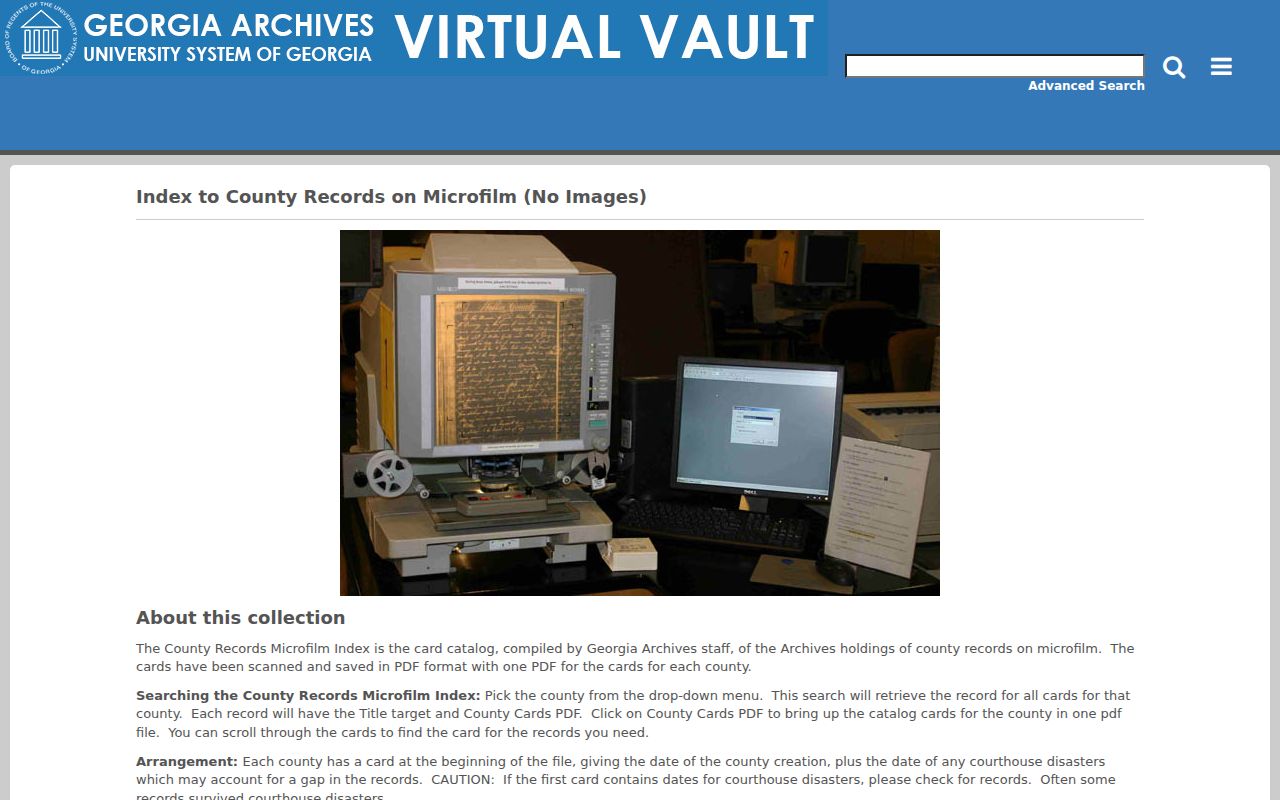
The catalog identifies a roll or book to request. The instrument itself supplies the names and property language that keep the McDonough chain intact.
GSCCCA also provides eCertification for electronically certified court and real-estate records. Certification proves that the copy is an official record from the custodian. It does not prove every conclusion drawn from it, such as continuous occupancy between two transfer dates. Keep index metadata, an ordinary image, and a certified copy in distinct categories.
Map McDonough Previous Residents
McDonough has a three-edition Sanborn sequence from May 1905, October 1911, and December 1923. The 1923 edition contains eight sheets. These fire-insurance maps do not normally name residents. They show the central built-up area's streets, lots, structures, materials, uses, and outbuildings. That physical evidence can bridge an old number or missing building to a legal parcel.
Start on the index sheet. Record the street, block, sheet, and every old number, then compare the same spot across editions. A new outline can date construction within a range. Sanborn coverage does not span every modern postal address.
The UGA Sanborn collection guide explains access to the holdings.
Use the map to join place and time, then return to named sources for evidence of who lived there.
Build McDonough Household Timelines
The verified Southern Bell books cover March 1974, March 1975, April and December 1976, and December 1977. An entry can include a subscriber name, suffix, compressed road address, locality abbreviation, and telephone. It may omit unlisted service, other members of a home, and people whose phone appeared under another name.
- Search each edition for the surname and road-name root without spaces.
- Inspect the scan because OCR may merge text such as
KeysFerryRdMcD. - Place each dated listing between deed transfers, with subscriber and owner in separate columns.
- Match the address to a public census, with 1950 the latest public decennial schedule in 2026.
- Compare names, relationships, ages, newspapers, and deeds without merging people on name alone.
The federal release rule is 72 years. Census facts reflect one day and may contain errors. A missing phone listing may mean unlisted service, not a move. The verified volumes are detailed on the McDonough city directories page.
A repeated telephone number may support continuity between editions, but numbers can be reassigned. Likewise, directory locality abbreviations matter because the editions cover McDonough, Hampton, Locust Grove, and Griffin-area exchanges. Preserve the printed locality instead of treating every result as a home inside McDonough city limits.
Brown House Finds McDonough Past Residents
The Brown House Family Research Library at 71 Macon Street adds local help. Volunteers work with more than 2,600 Georgia and county books, land-lot maps, family histories, surname files, periodicals, and microfilm of local newspapers, census schedules, and Confederate pensions. It is open Wednesday and Friday from 10 a.m. to 3 p.m. Confirm hours before visiting.
Bring the address, current parcel, legal description, names already proved, and date gaps. Exact McDonough reverse-directory titles and years were not verified. Ask staff to confirm the publisher, edition, coverage, street section, and key before relying on one. Brown House land-lot maps help when an old rural deed never uses today's road address.
Close McDonough Resident Gaps
The Henry County Weekly's digitized run from 1891 through August 1923 can connect past residents to probate notices, sheriff sales, marriages, deaths, social notes, and property descriptions. Search names and place terms, then inspect the page because OCR can fragment columns. A newspaper report is period evidence, not a certified record.
Henry Probate Court may hold a public estate caption, petition, will, executor, heirs, case number, and dates. The Georgia Archives historical death collection offers another endpoint.
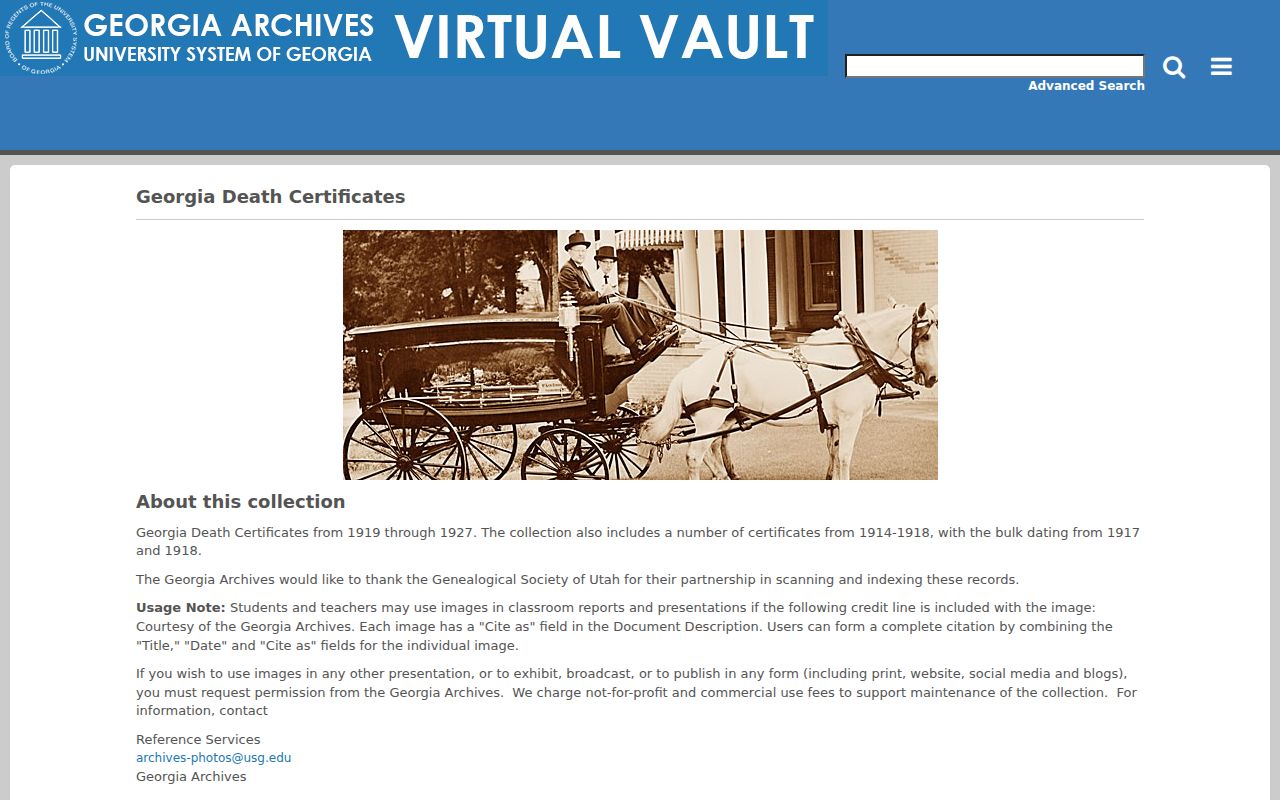
Use death, cemetery, obituary, and estate facts to explain a departure, not to infer that each heir lived at the home.
Keep Henry Land Identity Intact
Henry County was created in 1821. Parts later became Butts, Clayton, DeKalb, Fulton, Newton, Spalding, and portions of Rockdale and Fayette. A family can remain on the same land while the county on its record changes. Date-specific boundary research is vital for an early chain.
No official McDonough-wide street-renumbering year was found. Test a possible change with plats, legal descriptions, consecutive maps, directories, and ordinances. Subdivision, land lot, district, and lot-and-block language lasts longer than a postal label.
Use McDonough Previous Residents Lawfully
A deed proves a recorded transfer, not who slept in the home. A tax mailing address is where notices go. A phone subscriber does not name a full household. A map shows a building, not its occupants. Record each source, date, and conflict so later evidence can correct the timeline.
Lawful use. Research McDonough previous residents for family or house history. Never use an address trail to watch, expose, harass, or harm a living person.
Protected information should end that branch. Georgia's address confidentiality program shields eligible victims through a substitute address. Do not try to reverse it. Closed birth, adoption, court, utility, and similar records cannot be bypassed with an open-records request.